
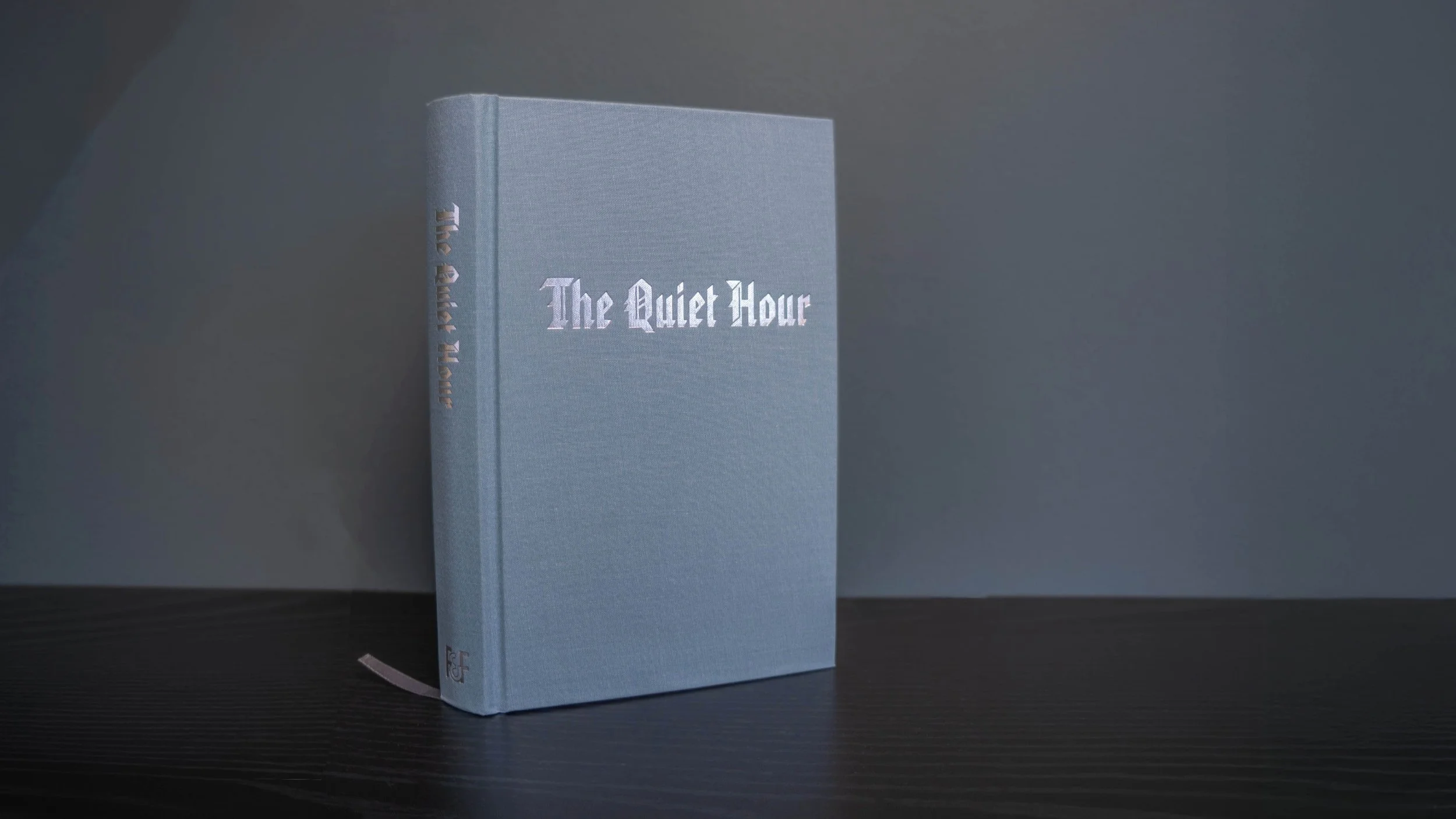
There are two ways in which a book like The Quiet Hour can be read.
The first way is to read it with the inquisitive mind and eye of the armchair historian or theologian. The Quiet Hour was first published in 1950 to mark the 50th anniversary of the founding of the Church of the Lutheran Brethren, which had been organized at a small gathering of pietistic Norwegian immigrant churchmen and churchwomen in Milwaukee, Wisconsin, in mid-December 1900. One reading for each day of the year, the 365 devotional readings found in this little volume come from the pens of fifty Lutheran Brethren ministers of the gospel—pastors, evangelists, missionaries, chaplains, and professors—whose names, though largely unknown to the average CLB church-goer of today, would have been familiar to almost anyone associated with the CLB seventy-five years ago. As such, The Quiet Hour provides a rare glimpse into the unique spiritual understandings, concerns, and emphases that were of greatest importance to the founders of the CLB and the generation that immediately followed them: the righteousness of God, the reality of sin and unbelief, the cross of Christ, the call of God to repentance and forgiveness, a saving faith, the assurance of salvation, godly living, the allure of worldly temptations, the urgency of evangelism, and the imminent return of Christ. If you wish to gain a deeper understanding of the spiritual fervor, moral touchpoints, and theological convictions that led our CLB forefathers to break away from existing 19th-century Lutheran church bodies to establish a new synod around the ideal of living Lutheran congregations more than a century ago, The Quiet Hour is a good place to begin.
But there is a second way of reading The Quiet Hour. These short Bible lessons, consisting of brief quotations from scripture followed by concise explanations and applications addressed variously to an unseen “dear reader,” “dear friend,” “dear soul,” or “Christian brother and sister,” were intended to be read in the solitude and privacy of the home. They were meant to be taken, like good medicine, in short doses, on a daily basis, prescribed by some trusted pastor, solicitous evangelist, or wise counselor who was equally adept at administering spoonfuls of scripture from the Old Testament as the New. Their concern was to bring the whole counsel of God to the unseen reader in whatever life circumstances he or she might be found, trusting the Holy Spirit to wield and apply the great two-edged sword of God’s Word with the fearsome strength of the mighty warrior or the healing touch of the surgeon. Are you doubting God’s love for you? There is assurance for your soul in these pages. Are you experiencing fear or anxiety? You will find Jesus’ word of shalom here. Have you drifted or wandered from the Lord? The clear call to come home will ring forth from these pages. When read in this second way, The Quiet Hour opens new windows not just into the dim recesses of our historical past but into the hidden places of our own hearts and souls as well. It is not just the voices of departed saints that speak forth from these pages, the voice of God speaks forth from them as well.
As the greater CLB family of North America comes together this year to mark the 125th anniversary of our founding as a synod and seek the Lord’s direction and guidance for the future, it is entirely fitting that we should choose this occasion to reprint The Quiet Hour, which stands as a literary testimonial—an Ebenezer stone—to God’s unbroken arc of faithfulness to us across the generations. K. O. Lundeberg (1859-1942), the founding president of the CLB, speaks in these pages of the “unmerited love in Christ by which we are saved.” E. M. Broen (1863-1938), the founding president of the Lutheran Brethren Bible school and seminary, looks with anticipation to the “perfect joy and happiness” that will be ours when we meet again “in our Father’s home.” J. I. Kaardal (1890-1977), pioneer CLB missionary to Africa, speaks of the amazing grace by which “we who were defiled are now clean in Christ.” Omar Gjerness (1922-2019), yet another president of LBS and the last of the original fifty Quiet Hour contributors to pass on into the Lord’s glorious presence a few years ago, calls attention to the vital ministry of the Holy Spirit, who guides us to Jesus again and again so that the receptive heart “responds to His grace as the rose to the rays of the sun.”
So, find a quiet moment in your day, brew a cup of coffee, ease into your favorite chair, open The Quiet Hour to today’s date, and allow the words of scripture and the wisdom of departed saints who walked faithfully with their God to minister to you today. There is something in these pages for every person, every circumstance, every need, every day of the year.
Dr. Joel Christenson is Professor of Mission and Evangelism at Lutheran Brethren Seminary. This article is the Preface for this 2026 printing of The Quiet Hour.