
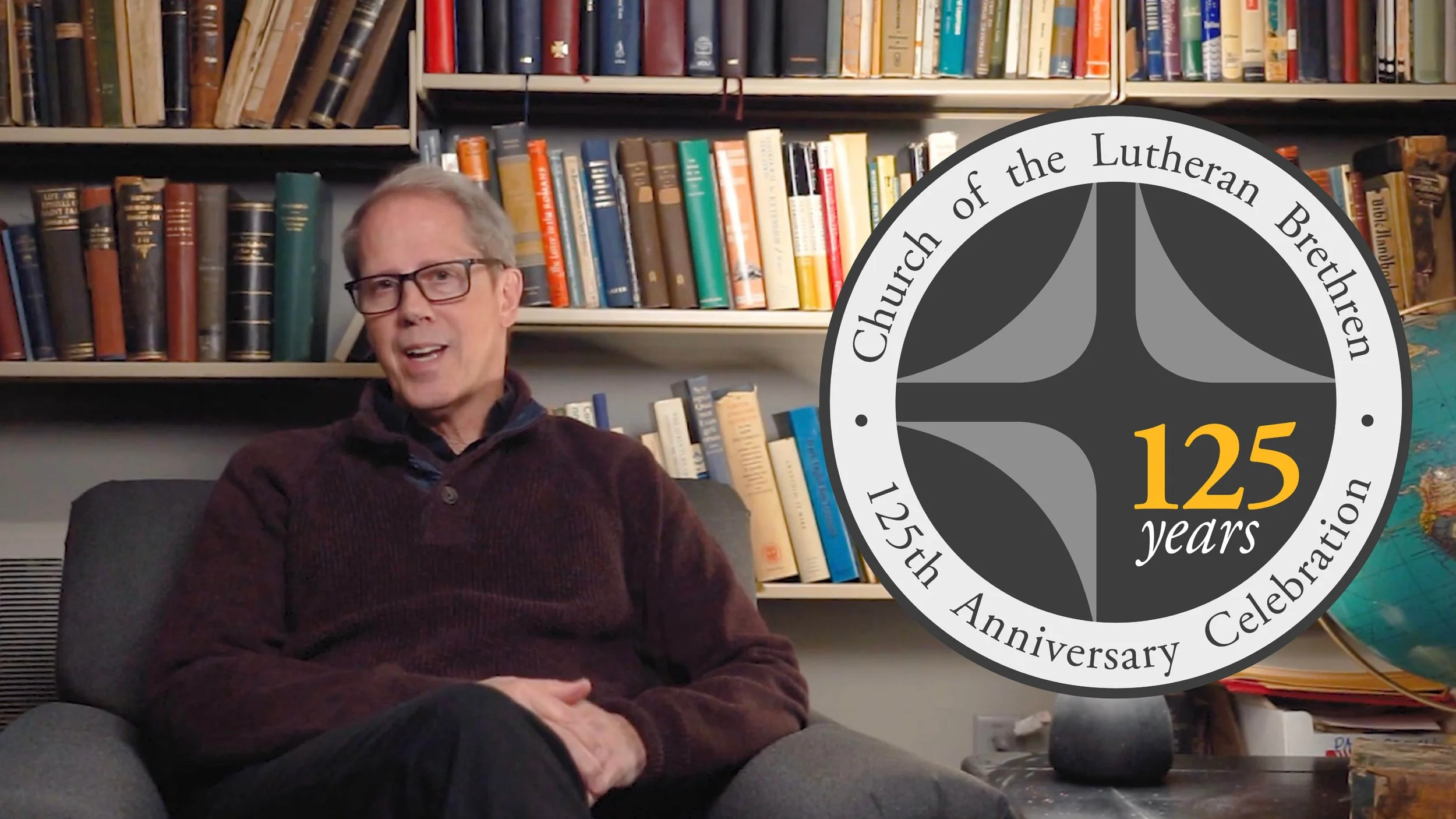
Adaptation of the Script for Part 1: CLB Beginnings
A Four-Part Documentary on the History of the CLB
The Church of the Lutheran Brethren as a new spiritual movement within American Lutheranism formally came into existence 125 years ago in an obscure church basement on West Madison Street in Milwaukee, Wisconsin.
But what brought those eight immigrant churchmen to America in the first place? And what compelled them to break away from existing American Lutheran denominations to launch something new?
A new spiritual movement needs more than just a visionary leader and a decisive inaugural event. It needs the soil of a shared culture and experience. For the Church of the Lutheran Brethren, that soil was Norwegian immigrant culture in North America. In the 1880s alone, one out of nine Norwegians left Norway in search of new opportunity elsewhere. Many were drawn to the Upper Midwest where land was readily available.
Those immigrants brought with them their own Norwegian Lutheran spirituality and church culture. For most, that meant the formal, liturgical, high church Lutheranism of Norway’s state church. For others, it meant the pietistic, low-church Lutheranism of Hans Nielsen Hauge and the Norwegian Free Church movement.
When spiritual revivals began to sweep through the Upper Midwest in the 1890s, many spiritually awakened pastors and converted lay persons were given a new experience of what it meant to be alive in Christ. They advocated for change—changed lives through the preaching of a gospel of repentance and forgiveness, and changed congregational practices with respect to confirmation, communion and church membership that better fit their new understanding of living Lutheran Christianity. But many resisted.
Two young, spiritually alive Norwegian immigrant pastors—Knut Lundeberg of Kenyon, Minnesota, and Engebret Broen of Osakis, MN—found themselves voted out of their Norwegian Lutheran denomination and their congregations in the 1890s as a result. While they and other evangelistic Norwegian-American preachers were able to start up new congregations, they still found themselves with no denominational home to call their own. They and their congregations were independent, widely scattered from one other, and alone.
Wanting to give voice to and unite the pastors and lay people of these pietistic, “Living Lutheran” congregations in the US and Canada, using his own financial resources, Pastor Lundeberg privately printed and mailed out the first issue of Broderbaandet on January 1st, 1899. Subscriptions to the new devotional, pietistic magazine grew. By 1903, more than 3,000 copies of the periodical were being mailed out on a biweekly basis.
As readership and interest in Broderbaandet grew, its editor looked for the right moment to gather sympathetic, like-minded subscribers together in one place for a time of mutual spiritual fellowship and encouragement. The opportunity came in late 1900. The Norwegian Lutheran Free Church of Milwaukee, WI, placed an open invitation in Broderbaandet for other independent “free church” congregations to gather together in mid-December for a six-day Bible conference. Lundeberg enthusiastically promoted the conference in Broderbaandet and representatives from a handful of other independent, free church congregations convened in Milwaukee on December 13 for the opening service.
On December 17, discussion turned to the question of forming a new Norwegian Lutheran denomination in the US patterned after the living congregational model of the Lutheran Free Church of Norway. Lundeberg proposed a name for such a denomination: Lutherske Brodersamfund, The Church of the Lutheran Brethren. After a time of prayer to seek the Lord’s guidance, a vote was taken and the new Norwegian Lutheran denomination came into existence. Lundeberg was chosen as the first president. Five congregations signed on as charter members: three from Wisconsin, one from Minnesota, and one from Illinois.
On the last day of the conference, two other motions were passed that would spiritually and materially shape the development of the Church of the Lutheran Brethren for decades to come. First, member congregations were urged to begin Intermission—home mission evangelistic work—in their respective locations as soon as possible. Then, the eight voting delegates moved that China should be designated as their foreign mission field and that mission work in China should begin as soon as possible.