
Adaptation of the Script for Part 3: LBIM Beginnings
A Four-Part Documentary on the History of the CLB
Back at the turn of the nineteenth century, from late 1899 to late 1900, a violent anti-foreign, anti-Christian peasant uprising called the Boxer Rebellion swept across much of northern China. Peasant mobs, armed with rifles and swords, directed the brunt of their ire against foreign missionaries and the Chinese Christians and churches associated with them.
When the founding convention of the Church of the Lutheran Brethren took place in Milwaukee, Wisconsin, in mid-December 1900, all of this heart-rending news coming out of China would have been fresh on the hearts and minds of all those at the conference.
Just before the founding convention came to a close on Tuesday afternoon, a brief, one-sentence motion was passed: “The convention in Milwaukee recommends to the congregations the China mission as the foreign mission and that they begin the work as soon as possible.” No further explanation was needed. The fledgling CLB was essentially committing its five member congregations to the collective launching of a new wave of missionaries to China to replace those that had just given their lives for the sake of the gospel.
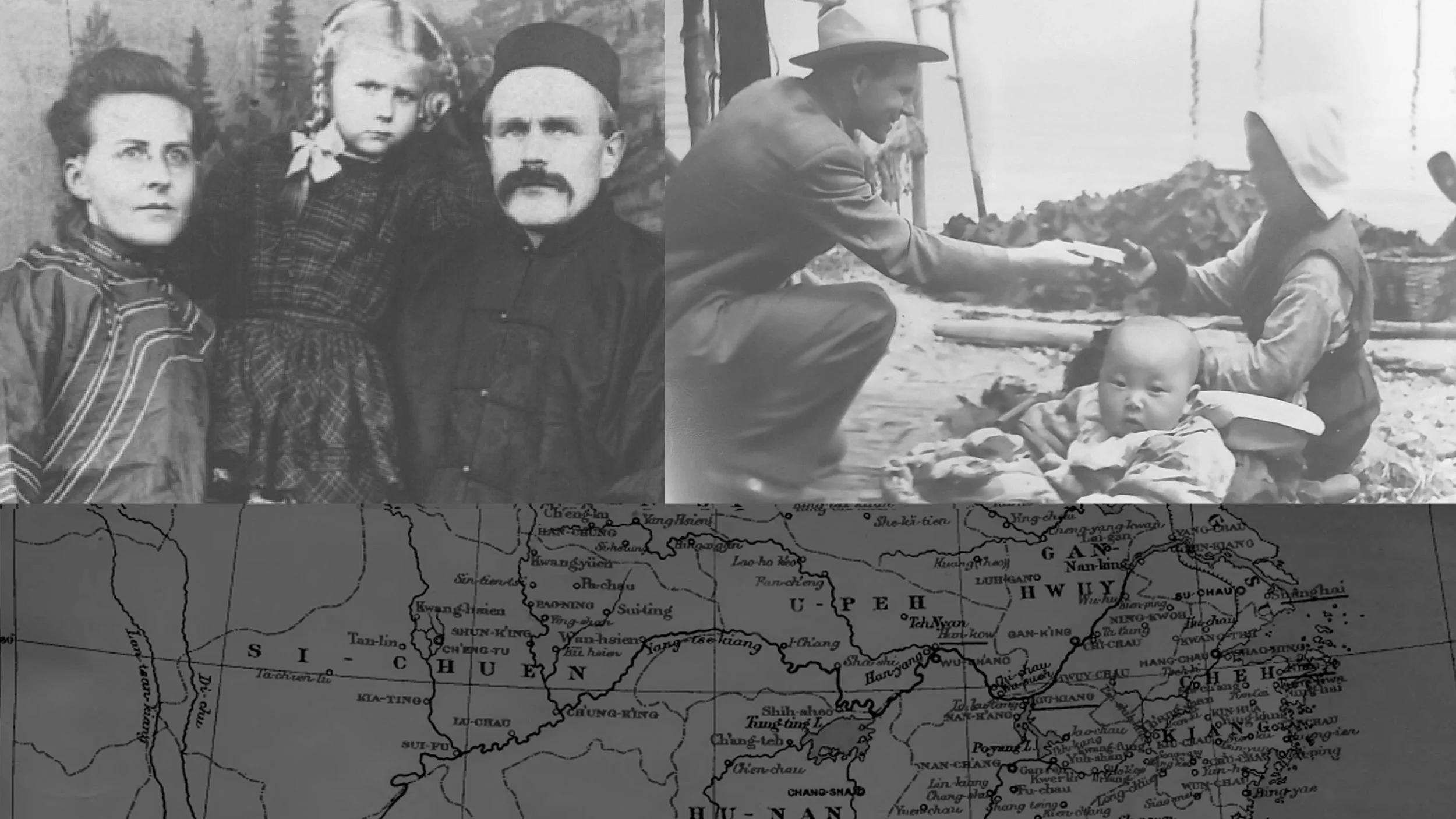
Reinholt and Juline Kilen, newlywed Bible school graduates from Minnesota, were the first to be sent, arriving in Central China in late 1902.
The first mission station was built in Zaoyang, Hubei, in 1903. Boys and girls schools were soon opened, evangelistic meetings were held, and the first Christian convert—a 62-year-old Chinese teacher—was baptized following special Christmas services in December 1904.
At the CLB’s 1917 annual convention in Grand Forks, North Dakota, delegates voted unanimously to start a second LB foreign mission field in Africa and then extended a call to Berge and Herborg Revne to be their pioneer missionaries to Africa.
The Revnes sailed for Africa in late November 1918 just as WWI was coming to a close. After extensive survey work, they finally settled on the border region between French Cameroon and Chad as the location for the first CLB mission station in Africa, moving to Lere, Chad, in the summer of 1920. Like the Kilens before them, they were seeking a region that had had no prior missionary presence.
A second CLB missionary couple, Jetmund and Sophie Kaardal, joined the Revnes in Lere in December 1920. Together, they immediately launched into the task of learning just a few of the nearly thirty tribal languages spoken in that border region. The Revnes focused on the Masana tribe and the Kaardals on the Mundang. It was slow, tedious work. The first Mundang convert would not be baptized by Kaardal until 1927. The Revnes would not see the first three Masana baptisms until 1930.
Over the next 70 years, the CLB would send nearly 100 additional long- and short-term missionaries from the US and Canada.
LB missionaries and their many African co-workers planted hundreds of new congregations; opened clinics, schools, and seminaries; trained hundreds of African pastors, catechists, and evangelists; translated the scriptures into numerous tribal languages; engaged in Christian radio ministry; and carried out substantial community development work in the areas of literacy training, community health, and agricultural development.
Back in Asia, all foreign missionary involvement in China—including Lutheran Brethren mission work in Henan and Hubei provinces—came to a halt with the Communist Revolution of 1949.
But as the Lord was closing the door to LB mission work in mainland China, He graciously began opening up new doors for East Asian mission work in nearby Japan and Taiwan. At the 1949 CLB annual convention, delegates heard that post-WWII Japan was now once again open to Christian missionaries and voted unanimously to begin new mission work in Japan at once, calling Morris and Marion Werdal as their first missionaries to Japan.
In less than a year, Werdal held the first baptismal service in Sakata, with nineteen new converts giving a jumpstart to the CLB’s first congregation in Japan. Over the next four decades, the CLB would send on average one new missionary per year to the Tohoku region of Japan, leading to the planting of two dozen LB congregations, the opening of a Bible school and seminary, and the training of dozens of Japanese pastors.
Hundreds of thousands of mainland Chinese refugees—civilians as well as military and government personnel—had fled to the island province of Taiwan in response to the Communist takeover of mainland China. This led to a desperate need for Mandarin-speaking missionaries to come to Taiwan to minister to these many mainland refugees.
Arthur Nyhus, the first LB missionary to arrive, purchased property in the city of Hsinchu in northwestern Taiwan. The first LB church in Taiwan was dedicated in Hsinchu on May 17th, 1952, and in 1966 a new Lutheran seminary would be established in Hsinchu as well. Today, LB missionaries to Taiwan partner closely with the existing China Lutheran Brethren Church of Taiwan to continue the task of evangelizing a population of 23 million on Taiwan that is still less than 7% Christian.
After more than a century of uninterrupted LB mission work in Chad and Cameroon, and more than 70 years of mission work in mainland China, Japan, and Taiwan, there are now nearly twenty-five times as many Lutheran Brethren congregations and church members outside of North America as there are in the US and Canada. God has indeed been gracious to us as the Church of the Lutheran Brethren, that his ways may be known on earth, his saving power among the nations.