
“Meanwhile a Jew named Apollos, a native of Alexandria, came to Ephesus. He was a learned man, with a thorough knowledge of the Scriptures. He had been instructed in the way of the Lord, and he spoke with great fervor and taught about Jesus accurately, though he knew only the baptism of John. He began to speak boldly in the synagogue. When Priscilla and Aquila heard him, they invited him to their home and explained to him the way of God more adequately.”
— Acts 18:24-26
How did I get here?”
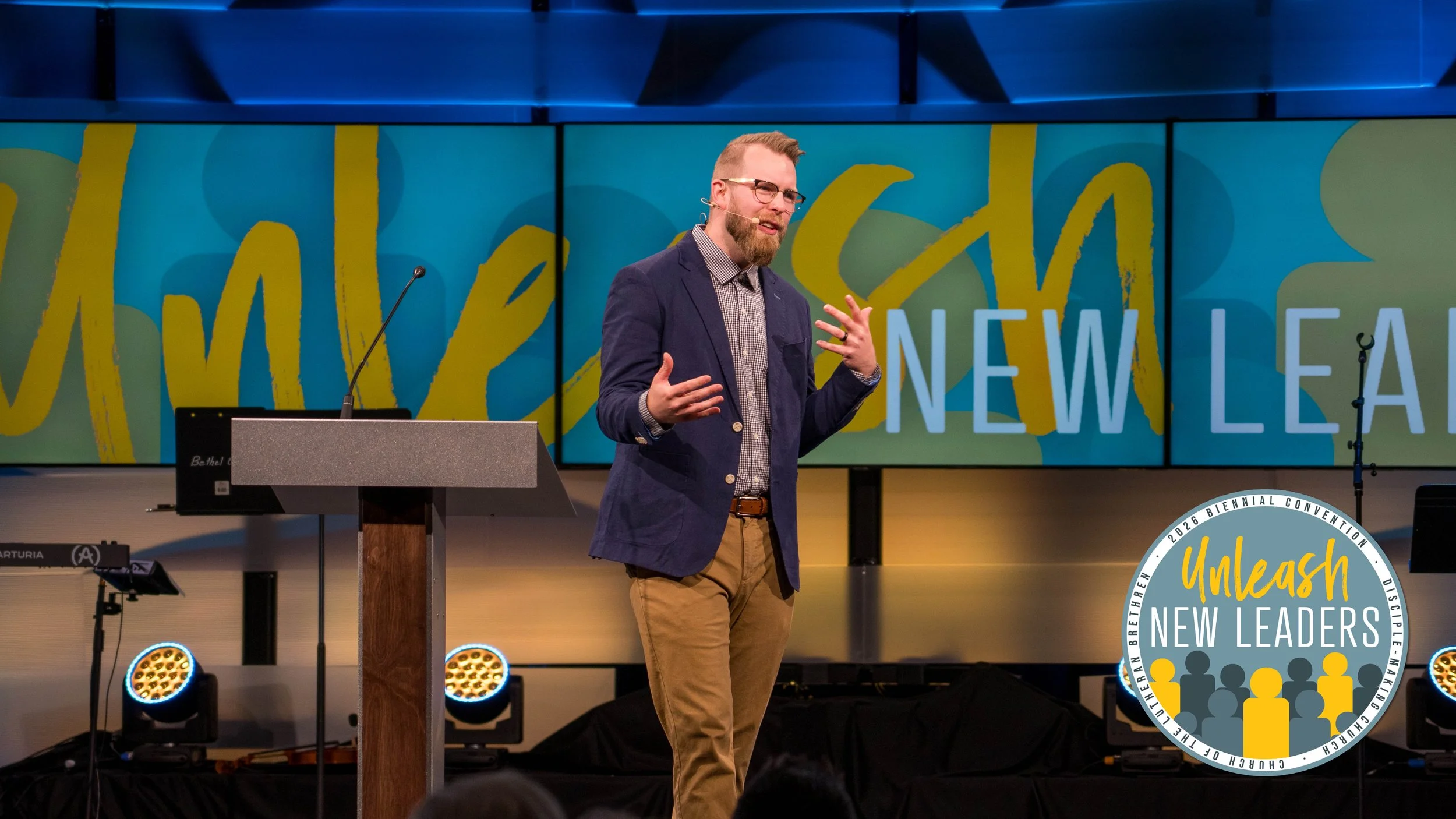
I ask myself that question often. As I look out from the church I pastor in Princeton, New Jersey, I still wonder how God brought me here. Honestly, I was asking myself that onstage at BC26 when I was invited to speak about developing new leaders. I thought they emailed the wrong person. I’ve only been a pastor for a few years. I’m not related to anyone from the CLB, I’m not a pastor’s kid, and I don’t pastor a big church. I came to faith as a child, wandered away from the Church for years, made plenty of mistakes, and took the hard way to pastoral ministry. Yet perhaps that’s exactly why I’m here. My story is one of being shaped by God before being sent by God.
That is also the story we find in Acts 18:24-28. Apollos was an impressive man. He is described as learned, mighty in the Scriptures, passionate in spirit, and bold in teaching. Reading about him, many of us think, “I wish someone like that would walk through the doors of my church.” We are often waiting for an Apollos to arrive fully formed. We want leaders who already possess knowledge, passion, gifts, and confidence. Yet the lesson of this passage is that even Apollos wasn’t ready. Although he knew much about God’s Word, he only knew about the baptism of John when it came to Jesus. He didn’t even fully understand the gospel. He needed shaping. And then he met Priscilla and Aquila, who hosted a house church in Ephesus. Rather than ignoring him because he didn’t fit their ideal or because he was an outsider, they invited him into their home and explained the way of God more accurately. They saw not only who Apollos was, but who he could become. This is an important lesson for the Church today.
The reason we talk so much about developing new leaders is because we desperately need them. Across denominations, churches face the reality of aging leadership and a shortage of people prepared to lead ministries into the future. God may not be sending us the leaders we expect, but he is sending us the people we need. The question is, are we willing to shape them? Too often, gifted people drift away from a church or sit disengaged because nobody helped them grow. Leaders become busy, discouraged, or overwhelmed, and discipleship becomes secondary to maintaining programs. But people are always being shaped by something. If they are not being shaped by God’s Word and God’s people, they will be shaped by the culture around them.
Programs have value, but they cannot replace personal discipleship. A one-hour class each week cannot compete with the countless influences people experience throughout the rest of their lives. When we look at Apollos, we should remember that his formation began long before he arrived in Ephesus. His family, community, and earlier spiritual influences had already shaped him. The believers in Ephesus simply continued that work. That means we must learn people’s stories. Before we can effectively shape someone, we need to understand how they have already been shaped. We must also learn to see potential where others might not. Throughout Scripture, God calls the not ready for what he has ready for them. Abraham, Moses, David, Jeremiah, Peter, and Timothy―to name a few. God delights in using imperfect people because it magnifies his grace.
When I arrived at my church, they needed new leaders, but didn’t know where to find them. There were few young adults, and most of the obvious leaders were already serving. Yet God was telling me that he was not finished with his church. I believe that is his message for the CLB, too. We just need to see the potential of the people he has already placed in our lives. That’s how I was shaped.
Many people saw gifts and potential in me long before I saw them myself. When I returned to church as a young man, I felt disqualified by my failures. Yet pastors, mentors, friends, and church members continued encouraging me, teaching me, and giving me opportunities to serve. They reminded me that leadership is not about worthiness. It is about God’s grace.
There is a couple who came to our church through a community outreach event. From the beginning, I noticed spiritual gifts and a deep faith in them. I wondered whether God might someday call the husband to become one of the leaders that our growing church needs. Maybe even an elder or pastor. But he didn’t see that possibility in himself. He was humble and recovering from hurt experienced in a previous church. We invited them into our lives and became friends. He recently came to us and said that he feels God is calling him to lead, but he was nervous to even say it because he didn’t feel worthy. But I told him what I’ve learned: none of us are. God calls the not ready for what he has ready for them. Rarely do we feel qualified. That’s why God gives us a community to shape us into who and what he is calling us to become.
Priscilla and Aquila understood this. They weren’t famous leaders. They were ordinary believers. But they opened their home, invested in relationships, and taught the gospel faithfully. Because they shaped Apollos, they didn’t miss out on one of the most influential leaders of the early Church. How many influential leaders might we be missing out on? Notice where the shaping happened: in a home. Shaping is individual. It is intentional. It is an investment in a life.
My wife Holly and I have experienced this firsthand. Since moving to New Jersey, our home has become a gathering place for people from all walks of life. And they tell us going through life together is what means the most to them. They see our imperfections. They see our struggles. They hear stories of God’s faithfulness in difficult seasons. New leaders need to hear how we actually got here―how God has shaped us. They don’t need us to pretend that we’ve always been ready. They need examples of ordinary people who are continually being transformed by God’s grace. Many churches struggle to develop leaders because they rely almost entirely on programs. Programs can identify potential, but relationships are what shape people. Early in our ministry, we started inviting young adults to our home every Thursday night for dinner, games, and conversation. What began with four people eventually grew into a vibrant community of dozens. Within that group, God began raising up leaders.
One couple felt called to start having neighborhood families over for dinner at their house, and now they’re discipling non-believers and their kids every other week. A young woman sensed God calling her to go to Rooted (gap-year program), but she was nervous. After we talked and prayed together, she went. She is now on our church staff helping coordinate our ministries. Several young men who had grown up in church felt called to read the Bible for themselves for the first time. We started meeting at a local restaurant to learn how to read the Word and how to share it with others. One of them ended up directing our VBS. One young man came from a family broken by addiction. At first he wanted little to do with me or church. Yet he came with his friends to our home, and now he has become a part of our family. He even watches my toddler, who loves him. He’s discovered a gift for working with kids in our church. He isn’t ready for leadership yet, but I can already see glimpses of what God may be preparing him to become. That is why we shape people. Because God is shaping them just as he does us. But that’s not the end goal.
Apollos was shaped in Ephesus, but he was sent to Achaia. The local church did not cling to him. They encouraged him, recommended him, and released him to serve elsewhere. Once there, he became a tremendous blessing to believers and a powerful witness for Christ. The Church grows when leaders are sent. Sometimes we invest deeply in people only to watch God call them somewhere else. That can be difficult, but it is part of God’s design. The same gospel that Apollos learned from a tent-maker and his wife changed lives in Achaia. But we’re reminded in Acts 18 that the believers in Achaia came to faith by grace. Ultimately, it was not Apollos who transformed lives, it was God working through him. The same is true for us. Everything begins and ends with God’s grace.
Jesus himself experienced the greatest “How did I get here?” moment in history when he hung on the cross for our sins. Yet unlike us, Jesus knew exactly how he got there. He was sent by the Father to save sinners. Now he sends us.
So let me leave you with a challenge. Think of one person already in your life. Someone who has gifts and potential, but isn’t ready yet. A young adult. A new believer. A volunteer. A church member. A neighbor. Commit to investing in that person. Invite them into your life. Share meals. Pray together. Open Scripture together. Encourage them. Help them see what God might be doing in their life. God shapes new leaders to be sent. By God’s grace, may the leaders we send reach thousands of sinners, who will someday say in heaven, “How did I get here?”
Pastor Drew Skog is the Pastor at Bunker Hill Lutheran Brethren Church in Princeton, NJ.