
CLB History of Christian Education
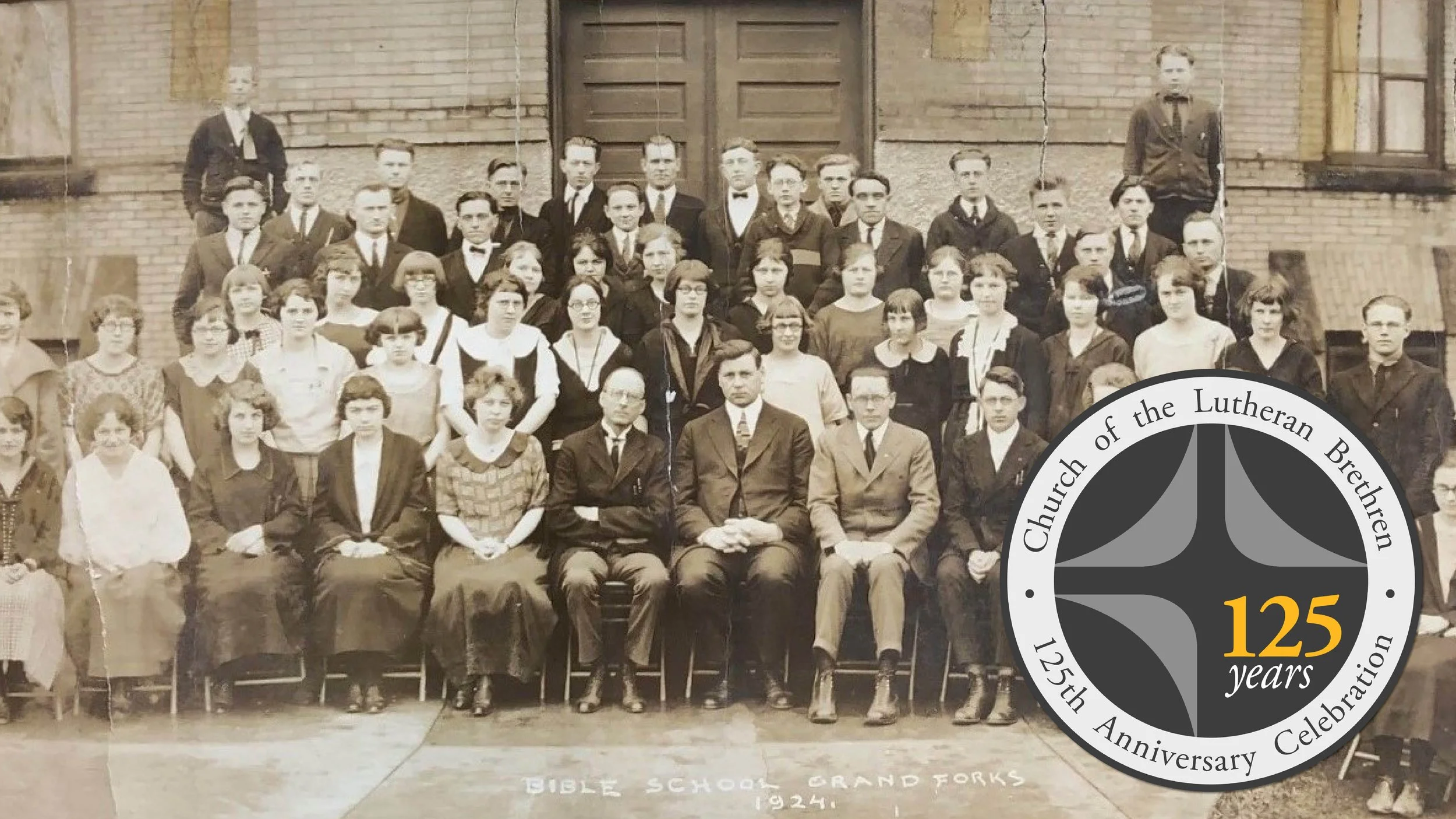
Adaptation of the Script for Part 2: LBS Beginnings—A Four-Part Documentary on the History of the CLB.
King Solomon once said, “Train up a child in the way he should go; and when he is old, he will not depart from it” (Proverbs 22:6, KJV).
There is wisdom in that proverb―wisdom not just for nuclear families but for spiritual families as well.
Little had changed in the prospects of the newly formed Church of the Lutheran Brethren when a small group of delegates gathered in Duluth, Minnesota, in June 1901, for the synod’s first annual convention. The number of member congregations still stood at five and there weren’t even enough trained pastors to serve them all. There was by then little hope that new pastors could be found for CLB congregations from the existing Norwegian Lutheran seminaries, which were united in their opposition to the new denomination. By the time the CLB reached its one-year anniversary in December 1901, it was apparent to all within the CLB that they must find a viable Bible school option for training their own pastors and missionaries or fade away from the lack thereof.
When delegates from eight CLB member congregations met in Mooreton, North Dakota, for the synod’s second annual convention in June 1902, the pressing need for a new Bible school was foremost on their minds. A three-person “Bible school committee” was created to explore all options and bring a proposal back the following year.
One committee member, Pastor E. M. Broen of Osakis, Minnesota, took upon himself the added task of putting together an experimental, short-term Bible school program for young people in his two rural congregations. In the slower winter months of 1903, eighteen students attended a 21-day Bible course at Elim Lutheran Church under Pastor Broen’s tutelage, giving Broen the opportunity to both trial a potential Bible school curriculum and assess his own capabilities as a Bible school teacher. Broen’s winter term Bible course was a resounding success on both accounts. One young student, John Klukken, would later recall that “an air of revival and a renewed dedication to God seemed to hover over every class” that Broen taught.
Broen and the Bible school committee brought a unanimous recommendation to the 1903 annual convention that the Lutheran Brethren should establish a new, centrally located Lutheran Bible School in Wahpeton, North Dakota. They reported that a spacious classroom could be rented at reasonable cost in the newly constructed Wahpeton High School and recommended a fall 1903 opening date. The convention delegates accepted the committee’s recommendation, called E. M. Broen to be president of the new Bible school, and appointed K. O. Lundeberg as the second faculty member.
The Bible School opened on November 2, 1903, with only eight students in attendance. Not to be discouraged, Broen cheerfully based his opening day sermon on Zechariah 4:10: “Who hath despised the day of small beginnings?” He was right to be optimistic. By the end of that first year, student numbers had increased to nearly thirty. Funds were raised during the 1904 summer break to build two faculty houses and a two-story school building on the north end of town. The main building was outfitted with classrooms, offices, a kitchen, a dining hall, and dormitory space to accommodate fifty students.
Even though K. O. Lundeberg only remained at the Bible School in Wahpeton for five years before resigning to take up a pastoral call in Minneapolis, Minnesota, he would look back on those years of teaching New Testament exegesis, dogmatics, and catechism classes with great fondness. “It was a pleasure to teach [there],” he later wrote. “It was like casting bait into a river full of fish eager to bite. The students sat alert, ready to pick up every word the teacher said.”
But it was Broen’s course on Missions History that ultimately left the deepest impact on generations of Lutheran Bible School students. “His whole heart was in that subject,” recalled Marie Harstad, a member of the inaugural class of eight students when the school first opened its doors. “Lots of times God’s presence was felt so strongly that the tears rolled down our cheeks. At times I thought I was more in heaven than on earth.”
When a decision was made at the 1918 annual convention to add a full four-year high school department to the Bible School, the need for a larger building became imperative. In the late summer of 1918, a spacious, three-story building that could accommodate up to 100 students became available in Grand Forks, North Dakota. Two years later, the first class of six graduating high school seniors received their diplomas.
Student enrollments during the Grand Forks Bible School years (1918-1935) peaked at 140 students in the early 1920s. But an inadequate heating system, low student enrollments during the Depression years, and crippling financial shortfalls continued to hinder the school’s growth. By the early 1930s, most faculty members were voluntarily cancelling a portion or all their salaries in order to keep the school from closing its door.
LBS wasn’t the only Bible school struggling to stay open during those Depression years. When the recently closed Park Region Luther College in Fergus Falls, Minnesota, was put up for sale in 1935 at one-third the cost of its actual value, President Broen jumped at the opportunity to make yet another strategic move. The three-story red-brick building, beautifully situated on a 17-acre campus near the banks of the Otter Tail River, could accommodate up to 200 students and included a new gymnasium to go along with ample dining facilities and classroom space.
While Broen was there to preside over yet another school move during that summer of 1935, he would not be around to witness the longer-term blessings that the provision of the spacious new building and campus in Fergus Falls would ultimately lead to. During the winter of 1937-38, Broen was on an extended preaching tour in Norway when he became bedridden with a severe case of influenza. He passed away peacefully on February 24, 1938, in Moss, Norway. He was 74 years old. Broen had served faithfully at the helm of the Lutheran Bible School for three-and-a-half decades. But it would be up to the next generation of LBS leaders―S. L. Klyve, M. E. Sletta, E. M. Strom, C. Christiansen, and A. A. Pedersen―to build upon the foundation that E. M. Broen had so skillfully laid.
In 1948, the high school department of the Lutheran Bible School would take on a new name―Hillcrest Lutheran Academy―to distinguish it from the Bible college and seminary departments. For the remainder of the twentieth century, these three departments would collectively be known as “Lutheran Brethren Schools,” with combined annual enrollments consistently topping 200 students by the mid-‘70s.
In 2003, exactly one hundred years after the founding of the Lutheran Bible School in Wahpeton, Hillcrest Lutheran Academy was incorporated as an independent private school with its own board of directors while remaining as an affiliate school of the CLB. In 2020, Hillcrest acquired a second campus in Fergus Falls and became a full-fledged K-12 private Lutheran school.
And LBS? It is still alive and well, even though the precise meaning of the term has evolved through several iterations over the past 125 years. From the “Lutheran Bible School” of the Wahpeton and Grand Forks years, to the “Lutheran Brethren Schools” of the post WWII era, to the “Lutheran Brethren Seminary” of today, LBS has continued by God’s grace to be the flagship educational institution of the Church of the Lutheran Brethren. May God continue to grant us wisdom and strength to stand firm in our commitment to biblical inerrancy, Lutheran confessionalism, the ideal of the living congregation, and the training of men and women for active involvement in God’s greater redemptive mission in North America and around the world.
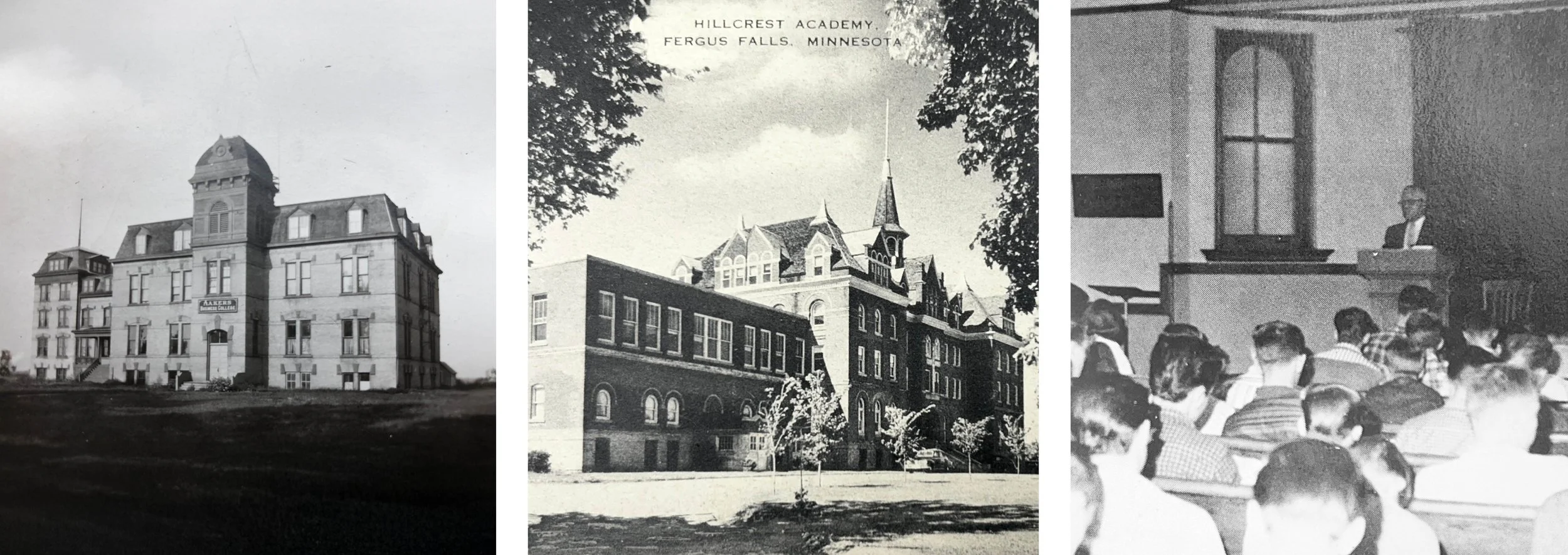
Left: Lutheran Bible School in Grand Forks, ND. Center: Hillcrest Lutheran Academy in Fergus Falls, MN. Right: Lutheran Brethren Schools chapel.